
The Arithmetic of Dying
How I'm Learning to Measure My Life in Hours, Not Years

I get asked a lot if I’ve watched this TV show or that one.
To which I usually reply, “No, I don’t really watch much TV.”
And they protest: “But it’s so good—you really should.”
I was talking about this with my partner, a professional writer who somehow watches even less TV than I do. She said she gets the same question, but she reminds me that the question isn’t whether the content is good or even worthwhile. It’s simply an inquiry into how you choose to spend the limited time you have in a day.
Because that’s exactly what we’re doing—spending our most valuable resource: time. At least when we spend money, we can (usually) make more. If we run out, we can borrow some. When we spend time, it is gone forever, never to be recovered.
“Just one more episode” takes you 46 minutes closer to your final breath.
“I Did All This While You Were Watching TV”
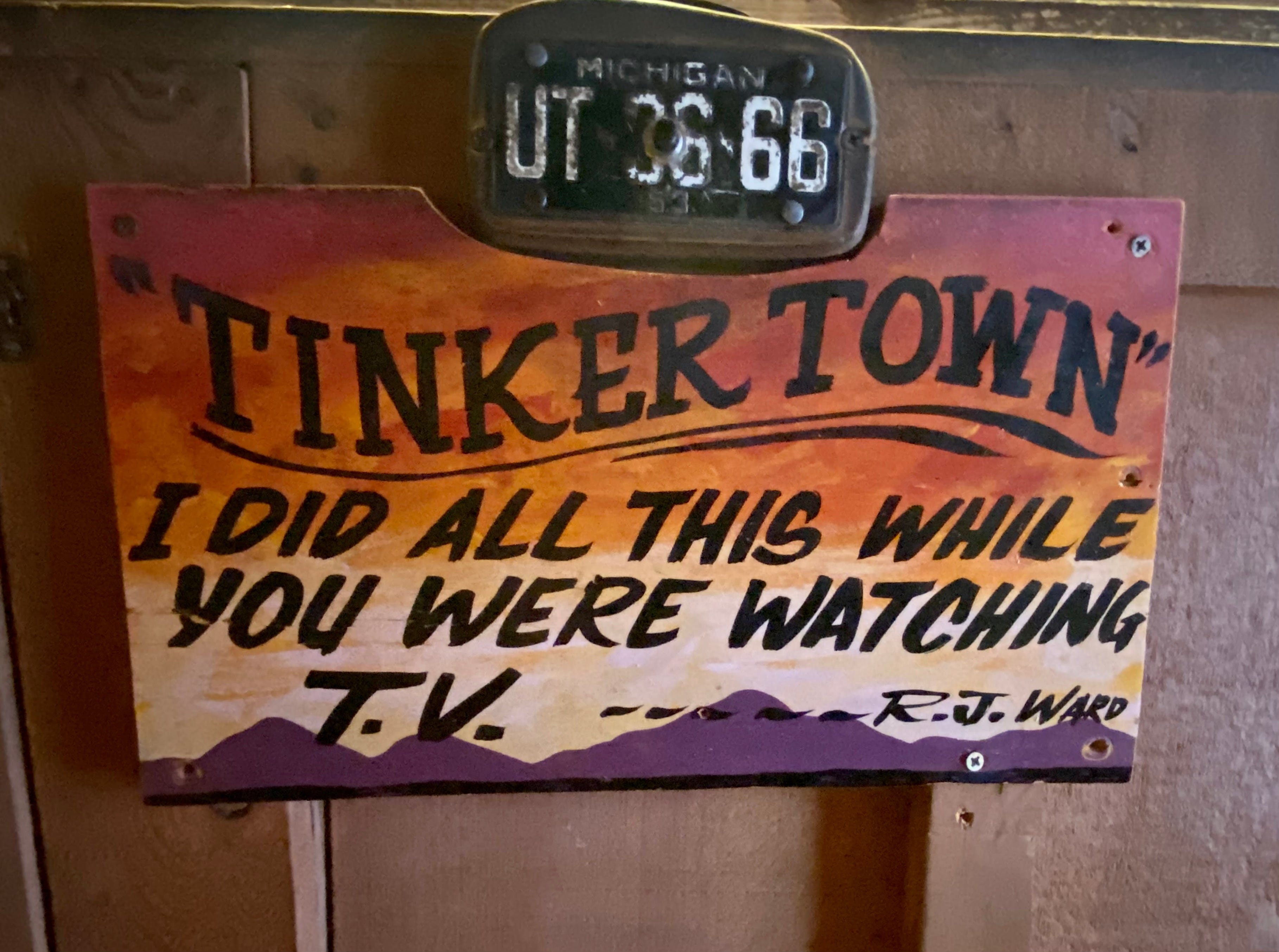
There’s a spot in the mountains of New Mexico that might be my favorite museum in the world: Tinkertown. It’s the life’s work of a man named Ross Ward, who spent decades collecting, carving, assembling, and tinkering—building his own little world out of glass bottles, carved wood figures, and pure stubborn imagination.
Ross built walls out of bottles. He painted hand-lettered signs. He filled rooms with miniature circus scenes and Western towns, all animated by tiny mechanisms. Every surface feels alive with curiosity and care.
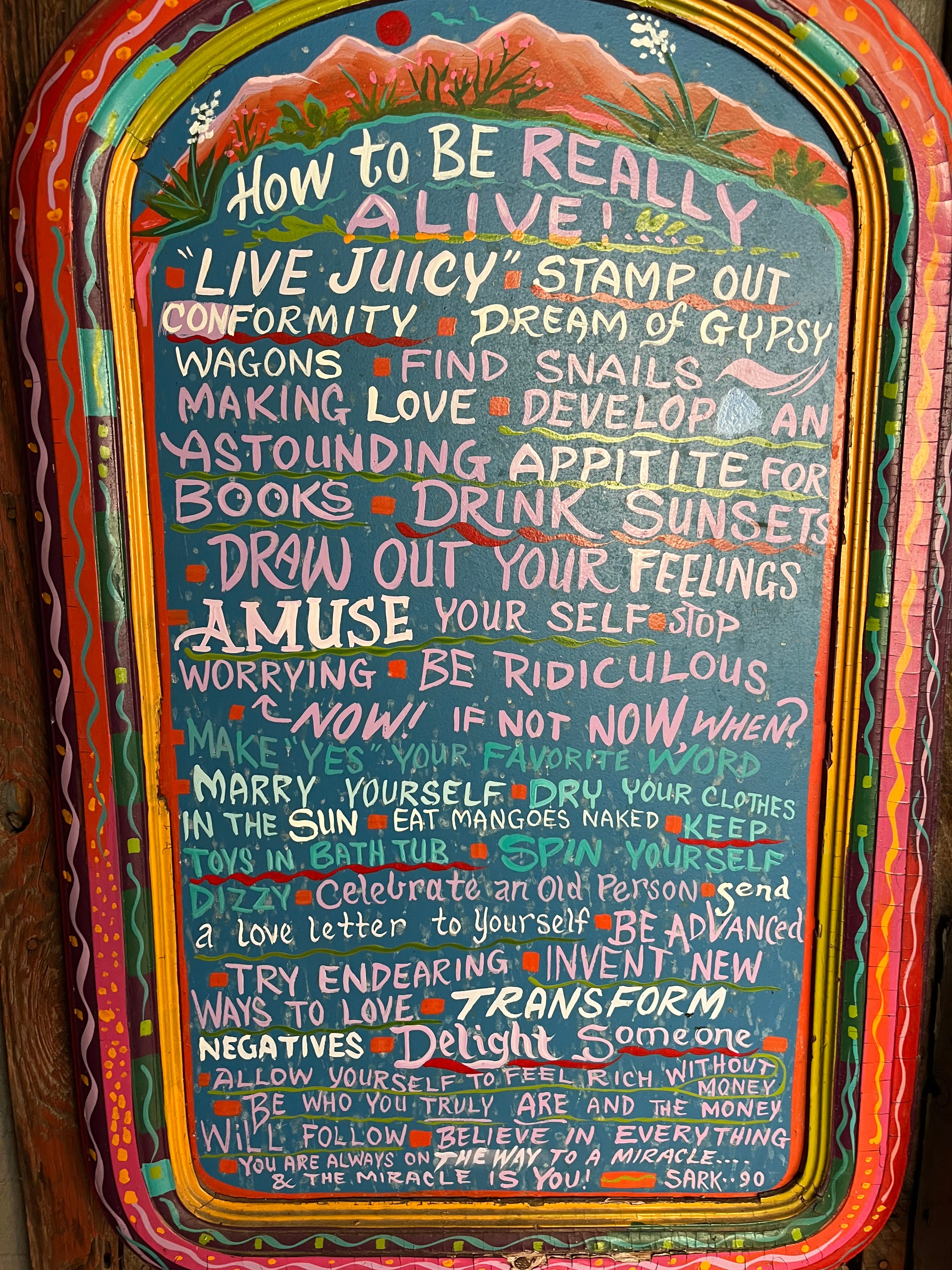
Scattered throughout the property is his favorite saying:
“I did all this while you were watching TV.”
Whether or not you love folk art, it’s impossible to miss the conviction in that line. Ross Ward wasn’t just building dioramas—he was building meaning. Every hour he spent tinkering was an hour of life reclaimed from passive consumption.
Ross died young. He was diagnosed with early-onset Alzheimer’s at only 58 and passed away 4 years later. But in those 62 years, he lived more life than most centenarians. He left behind a world he built with his own hands—proof that how we spend our hours matters far more than how many we get.
The Cost of Screens (Reframed)
The average American watches around 2½ to 3 hours of TV a day—roughly 1,000 hours a year, or twenty-five full workweeks. That’s half a year of waking life spent staring at a rectangle.
In a life-table model based on Australian data, researchers estimated that every single hour of television watched after age 25 reduces the viewer’s life expectancy by about 21.8 minutes. That is time off your life in addition to the time you spent watching.
Every single hour of television watched after age 25 reduces life expectancy by about 21.8 minutes.
Now, this is not a guarantee—but it’s a sobering projection. Every hour of passive consumption carries latent cost.
Would you feel more alive after an hour of The Bear, or an hour walking under the open sky? Would you grow more, learn more, or feel more connected after reading a book or an essay in The New Yorker, or after another episode of prestige TV?
To be clear: I’m not trying to make your value judgments for you. I just want you to be thoughtful about where you spend the one resource you can’t go earn more of.
The Great Inversion and the Death of Attention
We live in a culture that has made consumption the dominant mode of being. Our entertainment platforms are optimized to remove all friction—autoplay, infinite scroll, “next episode in 3…2…1…” The Great Inversion trained us to see our time not as a resource to be stewarded, but as a void to be filled.
When everything is available instantly, choosing not to consume becomes an act of rebellion. It’s not about rejecting pleasure or art—it’s about reclaiming attention as the raw material of a meaningful life.
So here are the uncomfortable questions:
What are the things that bring you joy?
What are your goals—for your life, for this year, for this week, for today?
Does watching the latest episode of The Bear bring you closer to those, or further away?
It’s easy to look down on “trash TV.” You might tell yourself you’re watching quality content—not Real Housewives of Terre Haute or Fake It Till You Bake It. But the issue isn’t what you’re watching. It’s whether you’re choosing to watch at all.
Maybe you genuinely love Yellowstone, and that’s great. Maybe sharing it with your partner is part of your connection ritual. But most of us aren’t that intentional. We fill the space between work and sleep with a stream of other people’s stories because it’s easier than making space for our own.
Ross Ward’s bottle walls stand as a quiet rebuttal to that passivity. He reminds us that every choice is an act of creation—or surrender. He reminds us that time is the only real currency we have. He reminds us that someday, maybe sooner than we think, we’re going to die.
And when that day comes, the question won’t be what shows we finished.
It’ll be what we built, what we learned, and who we became while we were here.
Memento Mori
